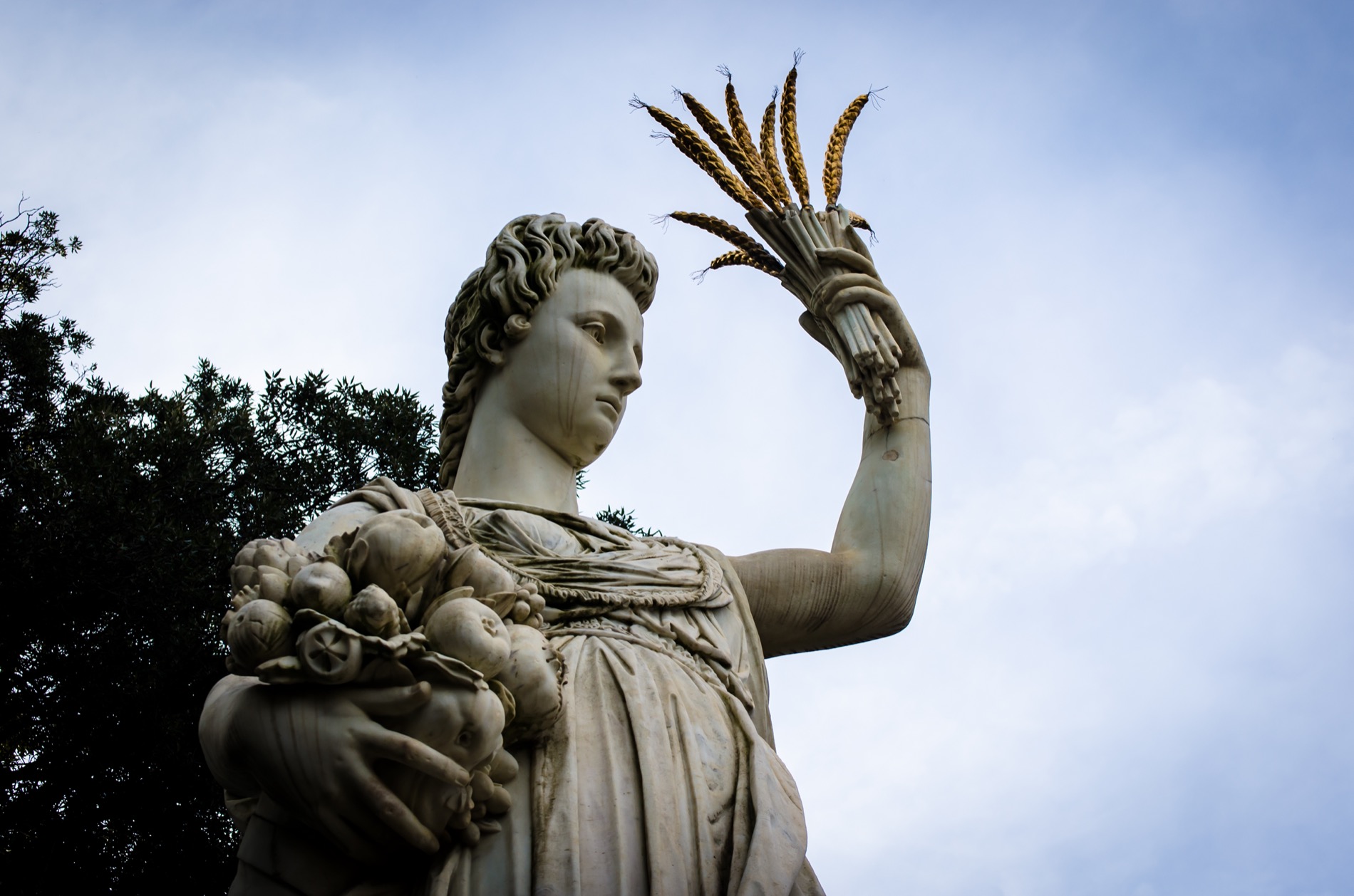
The Statue of Abundance
The Horn in Art
The horn has traversed the history of art and culture as an icon of power, abundance, and connection with nature.
If we dig into the roots of our civilization, we discover that it is an element with a dual significance.
From a mythological symbol to a decorative object in artistic works, the horn has taken on deep and varied meanings across different civilizations and historical periods: on one hand, the wild, the beast, the primordial force that inspires fear; on the other, the human hand that grasps it, shapes it, and transforms it into a symbol of a flourishing civilization.
In ancient art, the horn was often used as an icon of power and abundance.
A striking example of this usage is the Cornucopia, the famous “horn of plenty,” which symbolizes fertility, wealth, and the generosity of the gods.
In these depictions, the horn is not merely a functional element of the narrative; it assumes a strong symbolic connotation, transforming into an emblem of prosperitas and divine power.
The Figure of Abundance
And what is prosperity for a person of the ancient world? It is not chaos, nor is it disorderly accumulation. It is order! It is the ability to make the world flourish through vision.
Abundance, an icon of Roman classicism, offers us a lesson in style that transcends the centuries: in the cosmogony of symbols, it represents the noble art of generating.
The core of its symbolism lies in the horn—the legendary Cornucopia.
It carries a dual aesthetic and conceptual significance.
The Generating Curve: the horn’s spiral form mirrors the dynamics of natural growth (like the golden ratio of shells or the development of tendrils). It is a geometry that embraces and, at the same time, projects outward.
The Infinite Container: the horn of Abundance has no visible bottom; it is an open channel expressing a continuous flow that never runs out.
From the Legacy of Boboli to the Domestic Space
Unlike other deities, Abundance is almost always depicted with a posture of majestic composure. She holds the horn with a grace that suggests control: she is telling us something precise—”True wealth is harmony and balance.”
This mythology finds its most accomplished expression in the Boboli Gardens in Florence.
Here, the statue of Abundance with her cornucopia is solemn, rigid as befits a public work, yet if you look at her robes, at the horn, you sense life, you sense movement.
It is the eternal dialogue between art and landscape.
“The horn is not a mere piece of animal matter; it is a fragment of cultural continuity that we carry into our homes.”
A Contemporary Sign
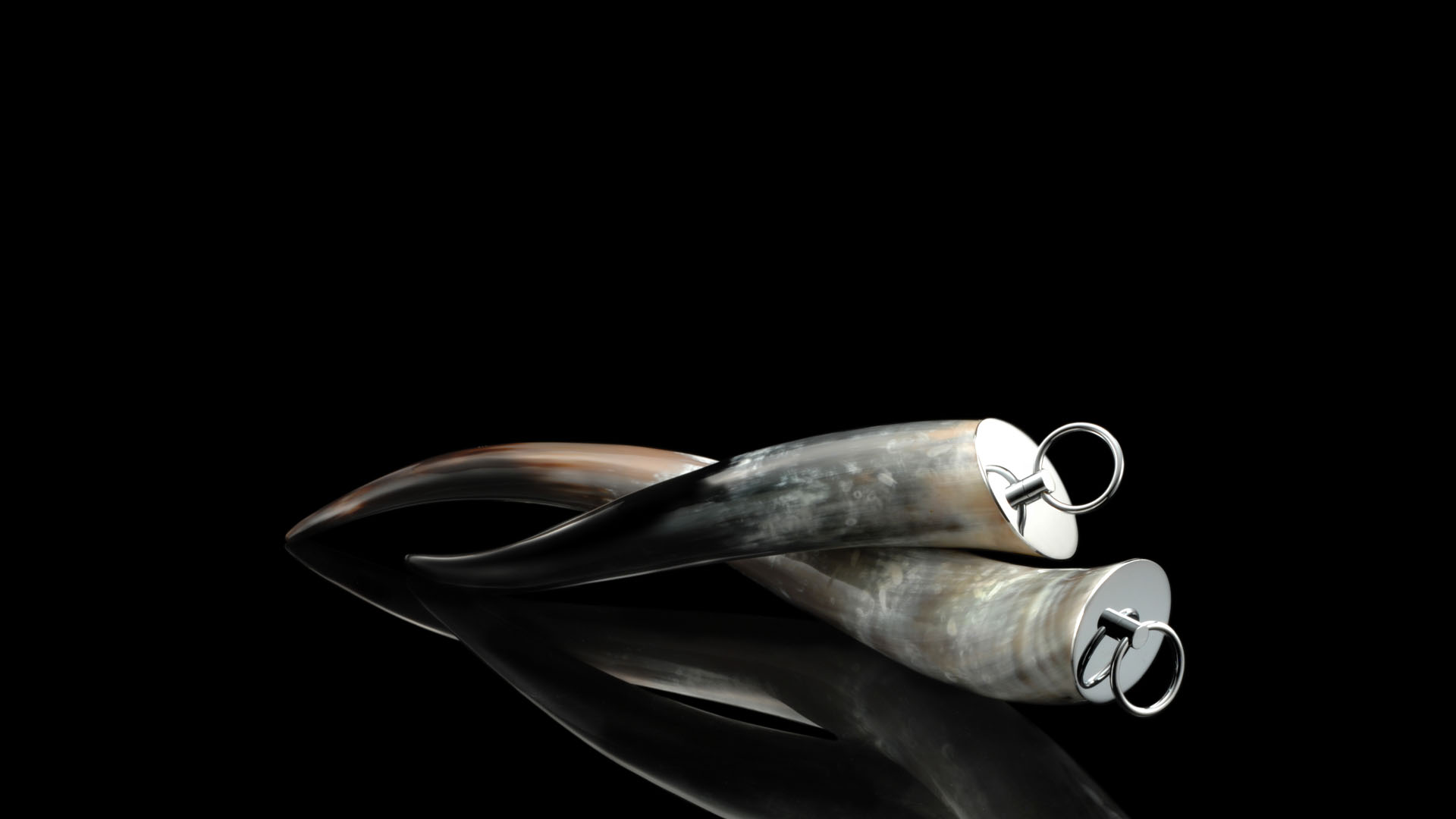
Today, that same symbol resurfaces in our interior design creations. It is a visual code. Incorporating a reference to the horn in a contemporary space means reconnecting with this very long chain that starts with Greek myths, passes through the palaces of the Medici, and reaches us today.
It is the ability to ennoble matter, to give a soul to an object by transforming it into a small piece of history. It is not just design: it is elegance with deep roots, that feels ancient yet speaks our language.